It’s been so quiet around here I forgot to let people know: there’s a great documentary about the Newton!
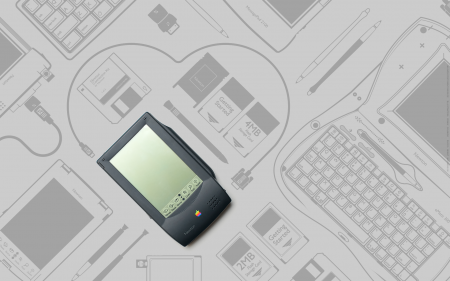
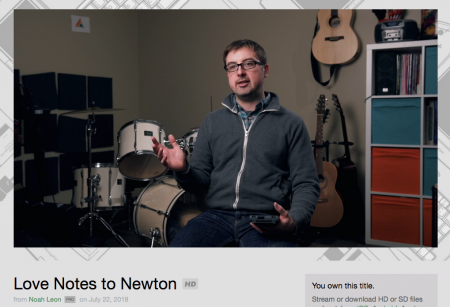
Love Notes to Newton, from filmmaker Noah Leon, is a collection of conversations with the Newton community: inventors, Apple executives, developers, and fans. It’s a beautiful story chronicling the full history of the Newton, from idea to prototype to launch, and the fandom that still flocks to the MessagePad and eMate all these years after its cancellation.
And hey, Noah was nice enough to ask me to participate:
The real story, though, comes from conversations with people who were there at its creation, and who are still there as collectors, tinkerers, and enthusiasts.
Noah, with all his collaborators, did an incredible job on putting this film together. Go buy it, and help spread the word.
Head over to Wired.com for a lovely write-up on the 20-year-old Newton Community from Cade Metz:
After its debut in early August 1993 — twenty years ago — the Newton was widely derided as a flawed machine that no one wanted. The Simpsons made fun of its handwriting-recognition software, as did Gary Trudeau with a Doonesbury gag. In Trudeau’s cartoon world, the Newton recognized “Catching on?” as “Egg Freckles?” — and the die was cast.
All in all, it’s fun experiment: take a tech journalist who has no direct experience with the Newton, and have him use it. Even better, McCracken’s MessagePad was practically new out of the box.
This section on battery life caught my eye:
20/20 hindsight may make the MessagePad’s screen look worse than it seemed in 1993; its battery life, however, benefits from a couple of decades of diminished expectations. Back in the 1990s, people squawked that the MessagePad H1000 drained its four AAA batteries too quickly. I found, however, that I could go for a couple of weeks on a set. In an age of smartphones that conk out after less than one day, that was more than enough to keep me happy.
Isn’t it something how our expectations have changed?
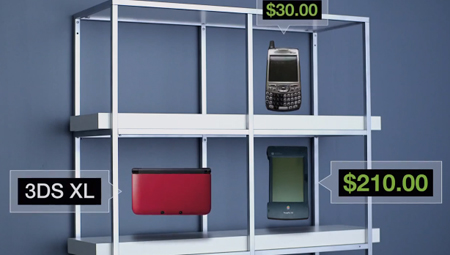
In honor of today’s iPad announcement, here’s another Newton appearance on a “worst of tech” appearance — this time on Bloomberg’s Tech’s Biggest Broken Promises slideshow:
Known as Newton, the name of its operating system, the line of Apple handhelds set out to revolutionize computing with its touch-screen and handwriting-recognition software. The technology was so bad in the $700 debut models that it became the butt of “Doonesbury” jokes: “I am writing a test sentence” became “Siam fighting atomic sentry.”
Right. Bloomberg throws the Newton a bone by lumping it in with other “heavily hyped products that were ideas ahead of their time” — the like Betamax.
Jonathan Coulton makes geeky music for geeks. That’s why this video from YouTube user KonogoRaiana, featuring Coulton’s “Still Alive,” the ending theme from Portal, makes so much sense.
Davis Remmel shows that hard-driving spirit that Newton owners are known for, especially after discovering the price of battery trays for his Newton MessagePad 2000:
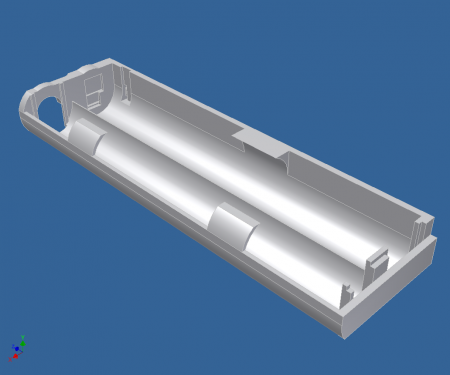
The two clips on the front AA battery tray, the ones that hold two of the batteries in, were very damaged. One was missing entirely (!), while the other was broken on one side and about to fall off. Yada yada yada, I went online to buy a new one, and the only place that had them priced them at “ONLY $95!”
THAT is absolutely ridiculous, so I loaded up trusty ‘ol Inventor and started modeling a new one to be 3D printed.
Amazing what today’s 3D printing technology is capable of doing, but be sure and heed Remmel’s advice and actually try the thing.
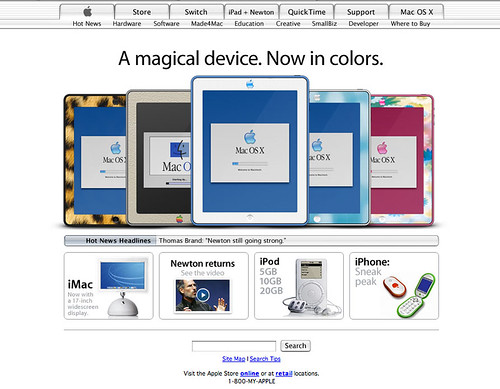
We had so much fun watching all of Thomas’s retro iPads come through that, shucks, why not make a retro Apple.com page again? So there you have it: Apple.com, circa never.
This time, I used the OS X 10.2 Jaguar-era Apple.com, with a fun iPhone fake mockup and an announcement that will never, ever come.
As far as the iPad goes: the white iPad 2 is the first time I’ve actually considered wanting an iPad. I still don’t have an iPad-shaped hole in my life, and the $499 could be used more productively in a lot of other places, but who knows. It’s a wonderful-looking product, and put me down as a fan of the white versions of Apple’s mobile devices.
As you can see in this recent photo, a detail of my setup, the Newton MessagePad is still an essential part of my workflow. So, despite its (untimely) cancellation, the Newton is still very useful to me, and to all the Newton users out there, and to those who are curious enough to purchase a used one and give it a try, my message is:
Isn’t that great?
Here, the thirteenth anniversary of the Newton’s cancellation, Mori (and many, many others) keep the faith.